
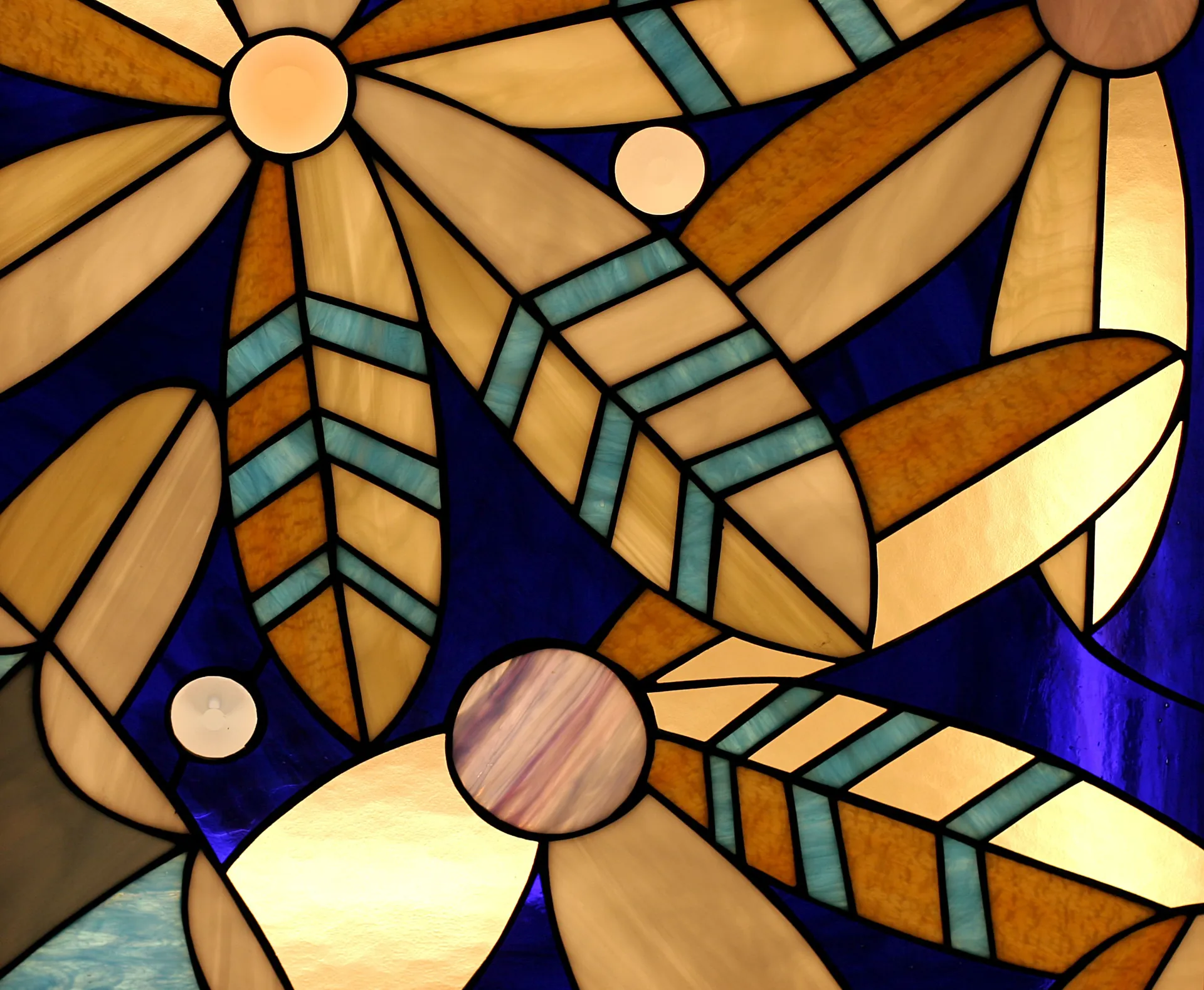
Glass Partitions & Screens
Internal screens, room dividers and door panels that separate a space while letting daylight travel all the way through it.

- Formats
- Partitions, doors, folding screens
- Glass
- Toughened, laminated, decorative
- Finishes
- Stained, etched, sandblasted
- Best for
- Open-plan homes and offices
Why glass rather than a wall
Open-plan living is wonderful until you want to cook without filling the lounge with noise, or work without watching the television. A glass partition gives you separation while keeping the sense of space and, crucially, the light. Daylight from a garden window can reach a hallway that would otherwise be dark all day.
In offices, glass creates meeting rooms and quiet zones without breaking up the floor. Acoustic laminated glass noticeably reduces sound passing through, so a conversation stays where it belongs.
Privacy where it matters
Privacy rarely needs a whole pane. Most of the time it is about eye level when seated or standing. We design bands of etched or stained glass at exactly that height, graded sandblasted fades that soften from clear to frosted, or a leaded panel that becomes the focal point of the room.
In workplaces, large clear panes need visible markings so people notice them. We turn that requirement into part of the design — a line of coloured glass, a subtle pattern or a sandblasted logo rather than an afterthought sticker.
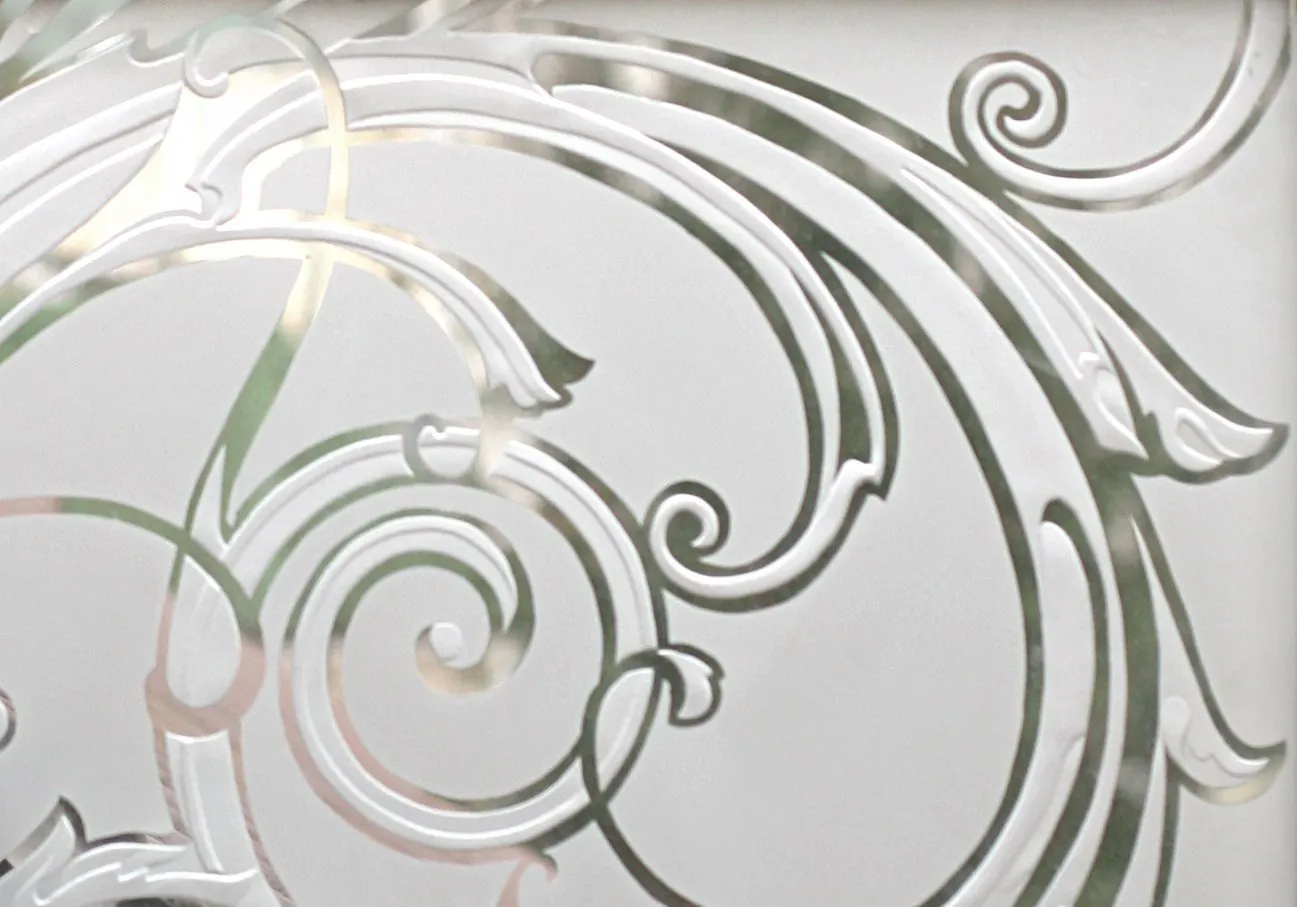
A good partition answers two questions at once: what should people see, and what should they hear?
Safety first, always
Glass in partitions and doors is in a critical location: people walk past it, lean on it and occasionally bump into it. Every partition we make uses toughened or laminated safety glass. Where a design calls for traditional stained glass, we laminate it or seal it inside a toughened unit, so the decoration is protected and the screen meets building regulations.
Frames, doors and freestanding pieces
The frame changes the whole character of a screen. Slim black steel gives an industrial, gallery feel; timber suits period and country homes; frameless channels let the glass float. Doors can be hinged, pivoting or sliding and are designed together with the fixed panels so the lines run through.
Freestanding folding screens are made as true pieces of furniture: hinged panels of stained or etched glass in timber or metal frames that can move with you from room to room — and from home to home.
Typical commissions
- Kitchen and living-room screens
- Office partitions and meeting rooms
- Internal doors and glazed panels
- Freestanding folding screens
Questions we are often asked
Can a partition include a door?
Yes. Doors are designed as part of the same composition, hinged, pivoting or sliding, and the hardware is chosen to suit both the frame and how often the door will be used.
Will a glass partition reduce noise?
Laminated acoustic glass reduces sound transfer considerably compared with standard glass. Sealing details around the frame matter just as much, and we plan both together.
Can a decorative screen be moved later?
Freestanding folding screens can go anywhere. Fixed partitions can often be removed and refitted elsewhere too, and we can advise on this at design stage.
Explore further
More of Our Craft

Every piece begins with a conversation
Bring colour into the light
Send us a photo of the opening and a few images you love. We will reply with ideas, glass samples and an individual quotation — no obligation.